

The largest jump-scare the cinema world has encountered in 2025? The return of horror as a dominant force at the UK film market.
As a style, it has notably surpassed earlier periods with a 22% year-on-year increase for the British and Irish cinemas: over £83 million this year, against £68 million the previous year.
“Last year, no horror film reached £10m at the UK or Irish box office. This year, five films have,” says a film industry analyst.
The big hits of the year – Weapons (£11.4 million), another hit film (£16.2 million), The Conjuring Last Rites (£14.98 million) and the sequel to a classic (£15.54m) – have all stayed in the cinemas and in the popular awareness.
While much of the professional discussion focuses on the singular brilliance of certain directors, their triumphs point to something evolving between viewers and the genre.
“I’ve heard people say, ‘Even if you don’t like horror this is a film you need to see,’” says a film distribution executive.
“Films like these play with genre and structure to create something completely different, and that speaks to an audience in a different way.”
But apart from artistic merit, the steady demand of spooky films this year suggests they are giving audiences something that’s much needed: therapeutic relief.
“Right now, there’s a lot of anger, fear and division that’s being reflected in cinema,” observes a horror podcast host.
“Scary movies excel at tapping into viewers' fears, amplifying them, allowing you to set aside daily worries and concentrate on the on-screen terror,” says a respected writer of vampire and monster cinema.
Against a global headlines featuring geopolitical strife, enforcement actions, extremist rises, and ecological disasters, ghosts, monsters, and mythical entities connect in new ways with filmg oers.
“I read somewhere that the success of vampire movies is linked to economically depressed times,” states an star from a popular scary movie.
“This symbolizes the way modern economies can exhaust human spirit.”
From film's inception, societal turmoil has shaped horror.
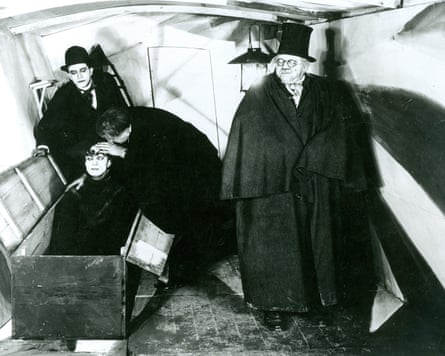
Analysts highlight the rise of German expressionism after the the Great War and the turbulent times of the early Weimar Republic, with features such as early expressionist works and the iconic vampire tale.
Later occurred the 1930s depression and Universal Studios’ Frankenstein and The Wolfman.
“Consider the Dracula narrative: an outsider from the east brings a corrupting influence that permeates society and challenges its heroes,” explains a commentator.
“Therefore, it embodies concerns related to foreign influx.”
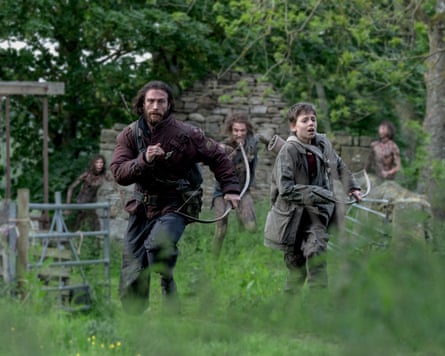
The specter of migration influenced the newly launched rural fright a recent film title.
The filmmaker clarifies: “I wanted to explore ideas around the rise of populism. Firstly, slogans like ‘Let’s Make Britain Great Again’, that harken back to some fantasy time when things were ‘better’, but only if you were a rich white man.”
“Secondly, the idea that you could be with someone you know and then suddenly they blurt out something round the dinner table or in a Facebook post and you’re like, ‘Where did that come from?’”
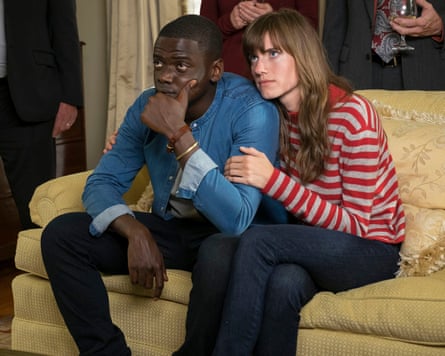
Maybe, the current era of praised, culturally aware scary films started with a clever critique launched a year after a divisive leadership period.
It ushered in a new wave of visionary directors, including a range of talented artists.
“It was a hugely exciting time,” comments a filmmaker whose film about a violent prenatal entity was one of the era’s tentpole movies.
“I think it was the beginning of an era when people were opening up to doing a really bonkers horror film which had arthouse aspirations.”
This creator, now penning a fresh horror script, notes: “In the last ten years, public taste has evolved to welcome bolder horror concepts.”
Concurrently, there has been a reappraisal of the overlooked scary films.
Recently, a new cinema opened in the capital, showing underground films such as The Greasy Strangler, The Fall of the House of Usher and the late-80s version of the expressionist icon.
The renewed interest of this “rough and rowdy” genre is, according to the cinema founder, a straightforward answer to the formulaic productions churned out at the cinemas.
“It’s a reaction to the sanitised product that’s coming out of Hollywood. You have a film scene that’s more tepid and more predictable. A lot of the mainstream films are very similar,” he says.
“Conversely, [such movies] appear raw. As if they emerged straight from the artist's mind, untouched by studio control.”
Scary movies continue to upset the establishment.
“Horror possesses a dual nature, feeling both classic and current simultaneously,” observes an authority.
Besides the re-emergence of the deranged genius archetype – with two adaptations of a well-known story imminent – he predicts we will see scary movies in the near future responding to our modern concerns: about tech supremacy in the near future and “monstrous metaphors in power structures”.
Meanwhile, a religious-themed scare film The Carpenter’s Son – which tells the story of Mary and Joseph’s struggles after the nativity, and features famous performers as the sacred figures – is set for release in the coming months, and will definitely send a ripple through the faith-based groups in the America.</

